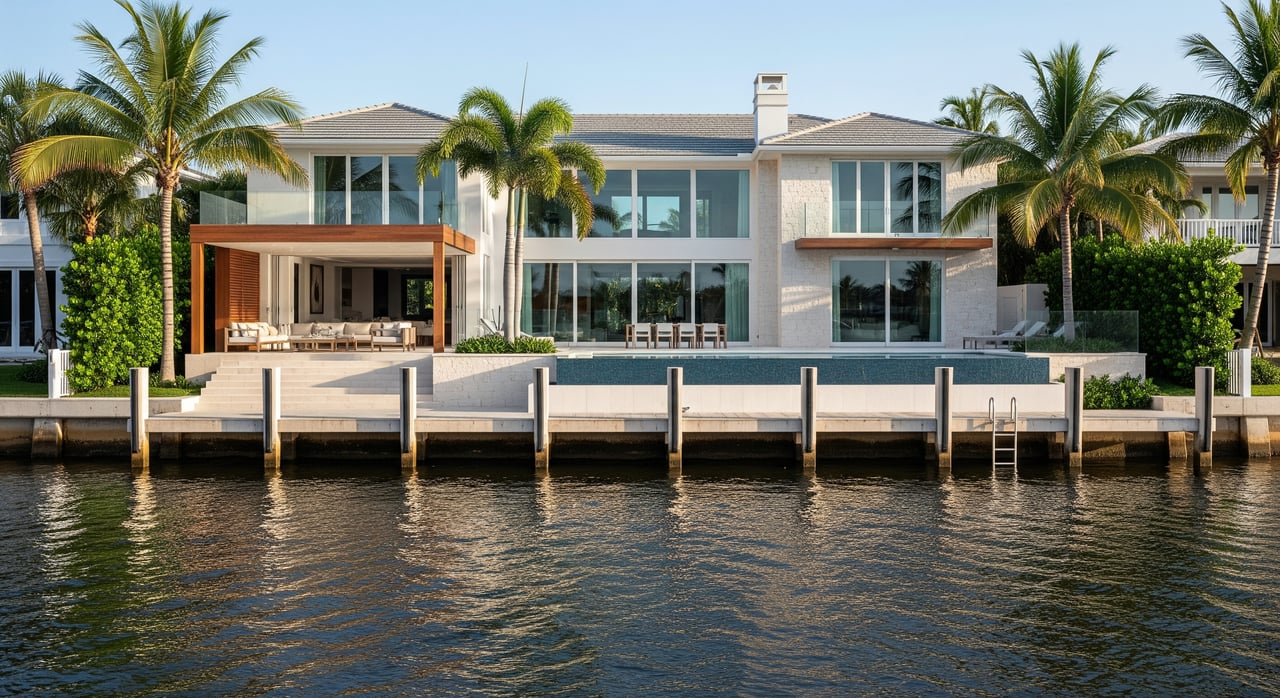
Salt air, sunlit water, and year‑round outdoor living draw you to Ocean Ridge. The next question is which waterfront architecture fits how you want to live. You want a home that captures the view, handles the climate, and looks timeless without constant upkeep. In this guide, you’ll learn the styles you’ll see along Ocean Ridge’s shoreline, how each manages light and indoor‑outdoor flow, and what matters for durability, insurance, and maintenance. Let’s dive in.
Why waterfront design matters
Ocean Ridge sits on Florida’s Atlantic coast in Palm Beach County with a hot, humid climate, intense sun, and salt air. Hurricane season runs June through November, so wind, surge, and flood resilience shape both design and insurance. That is why buyers and builders reference resources like FEMA flood maps, the Florida Building Commission for wind and opening protection requirements, and NOAA for sea level and tidal trends.
Local permitting also matters. Palm Beach County and the Town of Ocean Ridge oversee building, docks, and seawalls, and some projects require state or federal review. For process and property records, start with Palm Beach County. Docks and seawalls can also involve the Florida DEP and the U.S. Army Corps of Engineers depending on scope and location.
The waterfront styles you’ll see
Bermuda style
Bermuda homes lean classic and composed. You’ll notice steep hip or gable roofs, often light colored to reflect heat, compact massing, and a tidy rhythm of windows. Historic versions favor smaller openings, while today’s adaptations add larger waterfront glazing and French or slider doors. Modest porches and roof shading keep interiors cool.
How it lives:
- Views and light: Designers use shaded porches and larger water‑facing doors to frame views while controlling glare.
- Maintenance and resilience: Steeper roofs shed heavy rain well. Modern builds pair impact‑rated windows and corrosion‑resistant fasteners with either metal or tile roofing to manage salt.
- Lifestyle fit: A good fit if you prefer a classic coastal look with shaded outdoor spaces and moderate maintenance when built with the right coastal materials.
British West Indies style
Think broad verandas, generous overhangs, and airy, cross‑ventilated interiors. Standing‑seam metal roofs and operable shutters reinforce the tropical character and help with shade.
How it lives:
- Views and light: Large porches, wide openings, and sliding or bi‑fold doors create an easy indoor‑outdoor flow and panoramic water views. Deep overhangs cut glare.
- Maintenance and resilience: Metal roofs perform well when specified with corrosion‑resistant alloys and fasteners. Wood porches and shutters need rot‑resistant species or composite alternatives with regular finish care. Impact glass or rated shutters cover storm protection.
- Lifestyle fit: Excellent for entertaining and relaxed porch living with a tropical aesthetic.
Mediterranean Revival style
Mediterranean variants in Palm Beach favor stucco walls, arched openings, decorative ironwork, and low‑pitch clay or concrete barrel tiles in warm tones. Plans often include loggias, terraces, and courtyards that make the most of shade and breezes.
How it lives:
- Views and light: Framed arches and multi‑pane doors emphasize artful view corridors over full glass walls. Deep recesses and loggias temper the Florida sun.
- Maintenance and resilience: Stucco needs proper drainage and crack maintenance in humid, salty air. Clay or concrete tiles perform well in wind when properly anchored but require periodic inspection. Metal rails and anchors need corrosion protection.
- Lifestyle fit: Ideal if you prefer formal, classic luxury with terraces and courtyards as your outdoor rooms.
Contemporary Coastal style
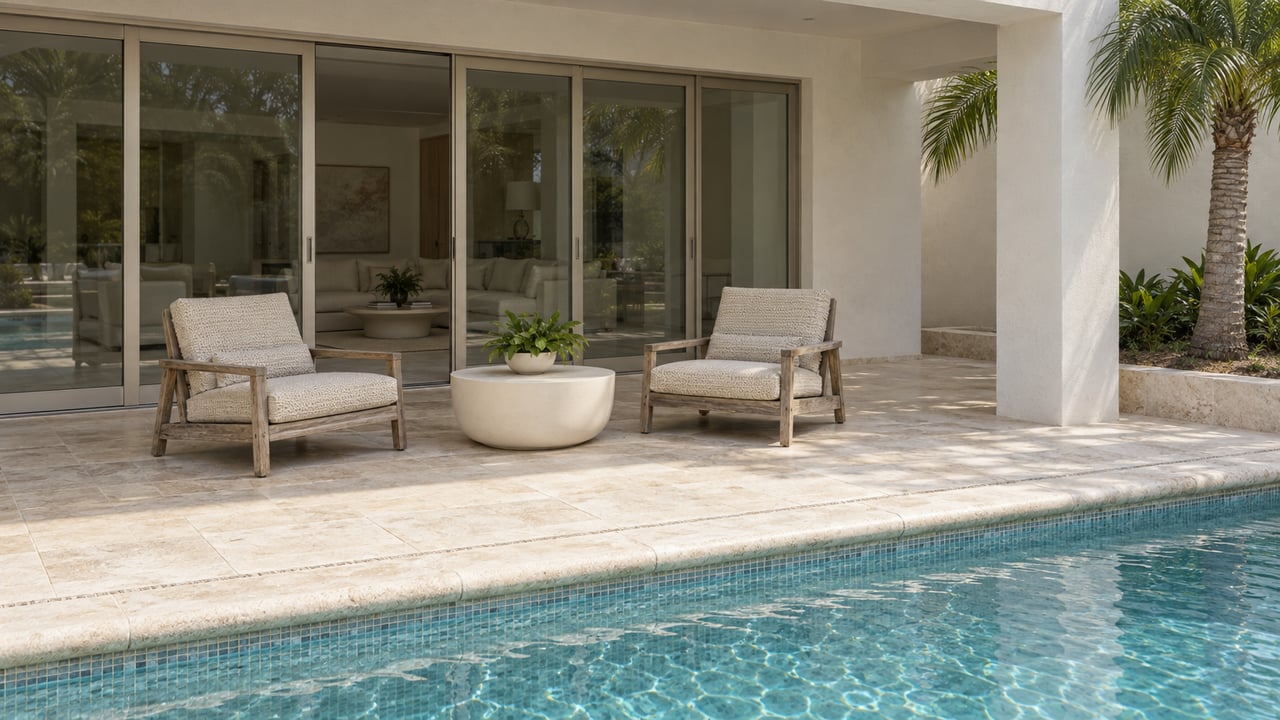
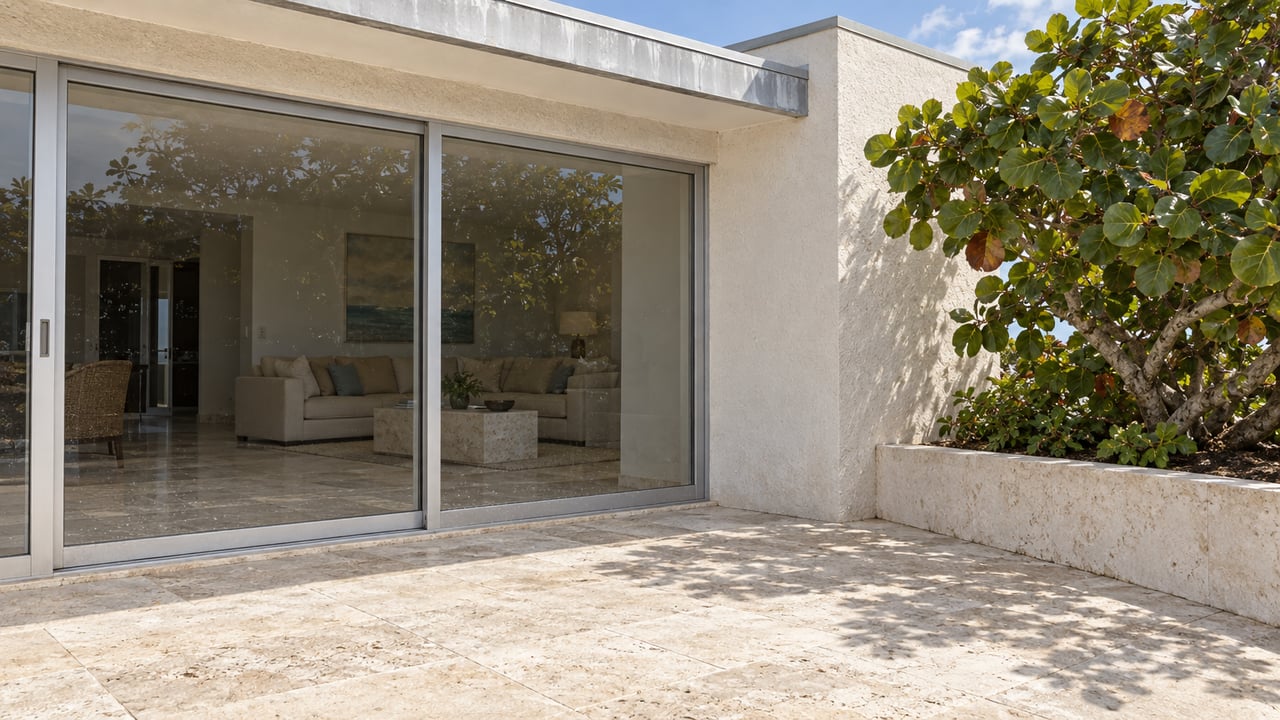
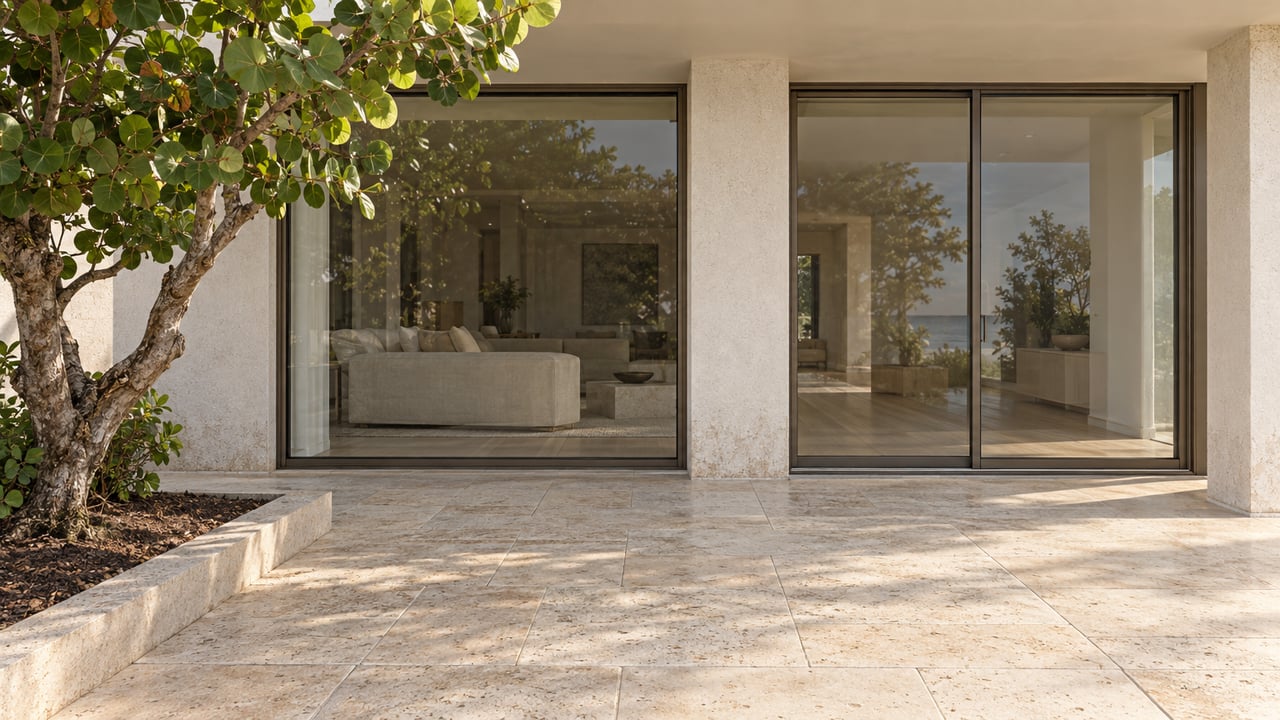
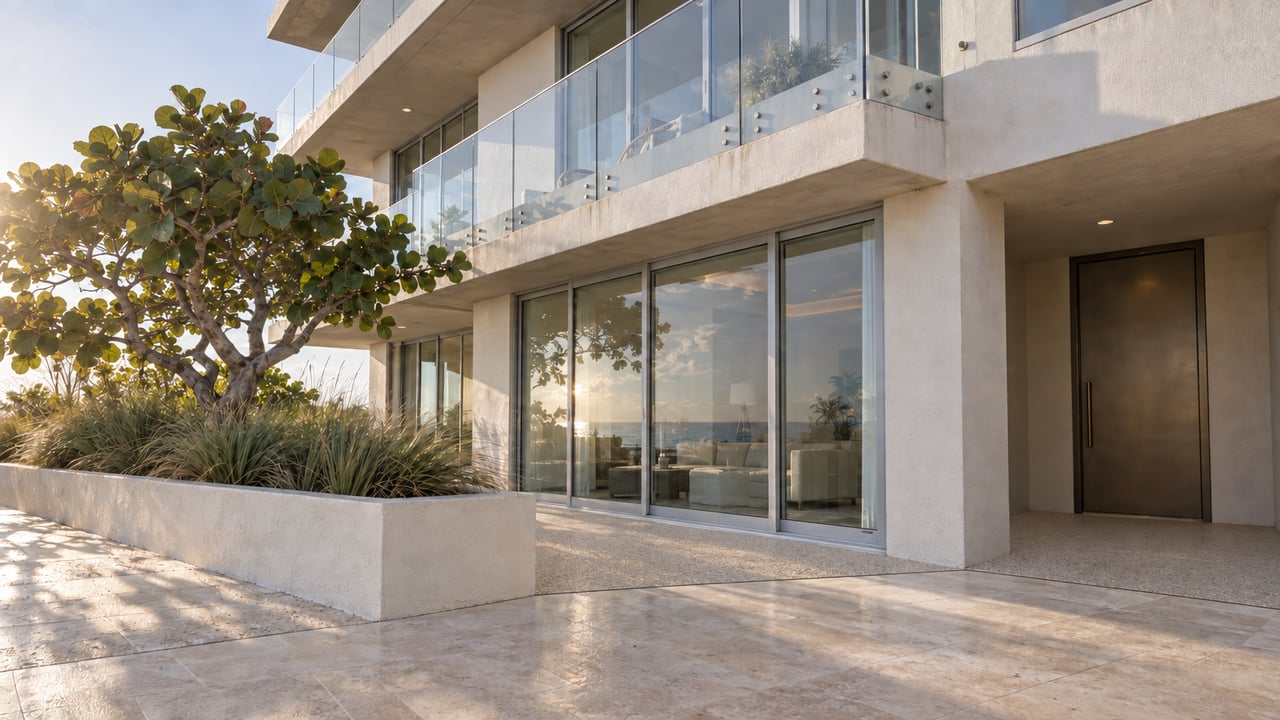
Modern waterfront homes pursue clean lines, open plans, and large sliding or stacking glass walls. Materials often include glass, aluminum, concrete, fiber cement, and high‑performance composites, with roof decks or cantilevers to push sightlines wide open.
How it lives:
- Views and light: Floor‑to‑ceiling glazing maximizes views and daylight. Overhangs, louvers, and brise‑soleil manage heat and glare without sacrificing the panorama.
- Maintenance and resilience: Impact‑rated glazing and corrosion‑resistant frames are essential. Flat or low‑slope roofs demand careful waterproofing and drainage. Specifying non‑ferrous metals and high‑grade composites helps hold up in salt air.
- Lifestyle fit: Best if you want seamless indoor‑outdoor entertaining, panoramic views, and a modern aesthetic, with materials selected to keep maintenance predictable.
Coastal materials that last
No matter the style, coastal detailing drives longevity, comfort, and insurance.
- Elevation and foundations: Many waterfront homes use elevated slabs on piles, pier‑and‑beam, or raised concrete foundations to meet Base Flood Elevation and local freeboard. Check FEMA and code rules for V‑zones where wave action applies.
- Openings and storm protection: Impact‑rated glazing is common in Palm Beach coastal homes. Rated shutters are an alternative. Design deep overhangs and operable shading to reduce heat gain and glare. Pay special attention to waterproofing at large sliding door sills.
- Roofing and drainage: Proven coastal roof systems include standing‑seam metal, concrete tile, clay tile, and high‑performance membranes on low slopes. Ensure proper anchorage for wind and positive slope for drainage on flat roofs. Make sure gutters and site grading move water away from foundations.
- Metals and fasteners: Favor 316 stainless, aluminum, or hot‑dip galvanized hardware with protective coatings. Choose composite or engineered decking for docks and terraces. For wood, select durable species like ipe or teak, or pressure‑treated options designed for marine exposure, and maintain finishes.
- Seawalls and docks: Seawall age and permit history influence maintenance needs and cost. Dock pilings, lifts, setbacks, and water depth should match how you plan to use your boat.
- Landscape and drainage: Opt for salt‑tolerant native planting to limit maintenance and stabilize soils. Pervious paving, bioswales, and planted buffers reduce runoff and protect water quality. For plant lists and guidance, see Florida Sea Grant and the University of Florida IFAS Extension.
- Mechanical and serviceability: Elevate HVAC and place equipment away from salt spray while maintaining service access. Use corrosion‑resistant curbs and fasteners for roof‑mounted gear and include lightning protection per code.
Buyer checklist
Use this quick reference when touring Ocean Ridge waterfront homes.
- Flood elevation and insurance
- Review the property’s FEMA flood zone and request the current flood elevation certificate. Compare to Base Flood Elevation and any local freeboard.
- Ask your insurance advisor to price both NFIP and private flood options based on elevation and enclosure details.
- Seawall and dock condition
- Confirm seawall age, material, and recent repairs; request permit history and clarify maintenance responsibility.
- Inspect pilings, decking, and lifts; verify water depth for your boat size and any setbacks.
- Roof and envelope
- Note roof type, age, and anchorage details. Look for corrosion at flashings and penetrations.
- Identify window and door protection: impact glass or rated shutters. Check seals and any signs of intrusion.
- Foundation and elevation
- Identify foundation type and whether it meets current local requirements for elevation and enclosures in flood zones.
- Mechanical and electrical
- Confirm HVAC, water heaters, and panels are elevated and protected from salt exposure.
- Materials and finishes
- Look for stainless or coated metals, composite decking, fiber‑cement cladding, and other low‑maintenance systems suited to salt air.
- Local rules and restrictions
- Verify Town of Ocean Ridge and Palm Beach County rules for setbacks, docks, and shoreline work. Confirm rental rules if income matters to you.
- Energy and shading
- Assess orientation, overhangs, and shading devices. If you plan solar, make sure racking and attachments are rated for coastal exposure.
- Resale and marketability
- Consider style appeal in the broader Palm Beach market. Mediterranean and contemporary homes are both popular in the county, with preferences varying by neighborhood.
Style, lifestyle, and resale
Your style choice is ultimately about how you want to live by the water. If panoramic views and seamless entertaining define your day, contemporary coastal designs deliver with sliding walls and open plans. If you value shade, breezes, and porch time, British West Indies or Bermuda homes create gracious outdoor rooms that still capture the view. Prefer formal courtyards and terraces with classic detailing? Mediterranean Revival offers enduring appeal with the right masonry and tile systems.
From a stewardship perspective, prioritize elevation, envelope integrity, and corrosion‑resistant materials first. Those choices influence comfort, insurance, and long‑term upkeep more than any trim detail. For technical verification, consult FEMA for flood mapping, the Florida Building Commission for code requirements, and NOAA for sea level and tide context as you evaluate specific properties.
Ready to explore Ocean Ridge?
Whether you are drawn to a breezy veranda or a glass‑walled great room, the right Ocean Ridge home balances beauty with coastal performance. If you want a quiet, private search and guidance that blends design sensibility with local market memory, connect with The Olive Belcher Team. Request a Private Consultation and let us curate options that fit your lifestyle, from classic Bermuda to modern coastal.
FAQs
Which Ocean Ridge style maximizes waterfront views?
- Contemporary coastal homes usually offer the widest, most uninterrupted glazing and sightlines, with Bermuda and British West Indies also adaptable using large water‑facing openings.
What is the lowest‑maintenance style for salt air?
- Contemporary designs specified with non‑ferrous metals, powder‑coated aluminum, high‑grade stainless, and composites can minimize upkeep; Mediterranean masonry is durable but stucco needs care.
Do you need impact glass or shutters in Palm Beach County?
- Local code and insurers typically require opening protection; impact glass avoids shutter deployment, while rated shutters can satisfy protection and offer stylistic authenticity.
How does seawall condition affect pricing and plans?
- Seawall replacement is a major potential expense that affects usability, insurance, and negotiations, so age, permits, and condition should be verified before you set price expectations.
Should elevation outrank architecture when you buy waterfront?
- Yes. Meeting required elevations for flood safety and insurance should come first, since most aesthetic goals can be achieved while building to proper height and foundation standards.
Which roofing performs best near the ocean?
- Standing‑seam metal, clay or concrete tile with proper anchorage, and high‑performance membranes on low slopes are proven coastal systems when detailed for wind and drainage.