Shopping for a waterfront home in Pompano Beach and keep seeing “no fixed bridges” in the listing notes? If you own a boat or plan to, that phrase matters. It hints at easier ocean access, but it does not tell the whole story. In this guide, you will learn what “no fixed bridges” really means, how local routes to the Atlantic work, and the exact steps to verify that a property fits your vessel. Let’s dive in.
What “no fixed bridges” means
“No fixed bridges” is common marketing shorthand. It means there is a water route from the property or marina to the ocean that does not require passing under a non‑movable, low‑clearance bridge. If your boat has a tall mast or radar arch, this can be a key advantage.
It does not promise unlimited vertical clearance. It also does not guarantee safe water depth along the route. Depth can vary with tides, shoaling, and maintenance. Treat the phrase as a helpful signal, not a guarantee.
You will also see references to movable bridges. These are lift, bascule, or swing bridges that open on a schedule or on request. They are not “fixed,” but they may add time to your trip.
Pompano Beach access routes
In Pompano Beach, most boats reach the Atlantic via the Intracoastal Waterway and one of two primary inlets in Broward County: Port Everglades to the south and Hillsboro Inlet to the north. Neighborhood canals and marinas typically feed into the ICW, then you head north or south to your preferred inlet.
Routes can look straightforward on a map, yet conditions change. Shoaling near bends or inlet approaches, seasonal sediment, and tidal currents can affect safe passage. If a route is advertised as “no fixed bridges,” confirm that applies from the specific dock you plan to use all the way to the inlet.
Draft and air‑draft basics
Two measurements determine if a home’s water access works for you:
- Draft: The depth of your hull below the waterline. This must clear the canal, slip, and channel depths with a safety margin.
- Air‑draft: The height from the waterline to your boat’s tallest fixed point. This determines if you can pass under any bridges that do not open.
Also note tide range and the chart datum known as mean lower low water. Charted depths are usually measured at a low‑water baseline. Real‑world depths can be less at extreme lows or after storms.
Match your boat to the neighborhood
A strong match starts with your vessel’s dimensions and your boating style. Consider these patterns:
- Weekend center console, shallow draft: Many private canal homes can work. “No fixed bridges” may be convenient, but depth and lift options often matter more.
- Sailboat with a tall mast: Prioritize “no fixed bridges” or very high clearances and a clean, unimpeded path to an inlet. Depth and cross‑currents also matter for keel handling.
- Larger power yacht with deeper draft: Maintained channels, dredging frequency, and marina support may outweigh bridge concerns.
- Frequent offshore or Bahamas runs: Favor direct ICW frontage, dependable depths, and access to fuel, pump‑out, and haul‑out services along the route.
Dock types to consider
Different dock setups offer different benefits. Decide what fits your vessel and routine.
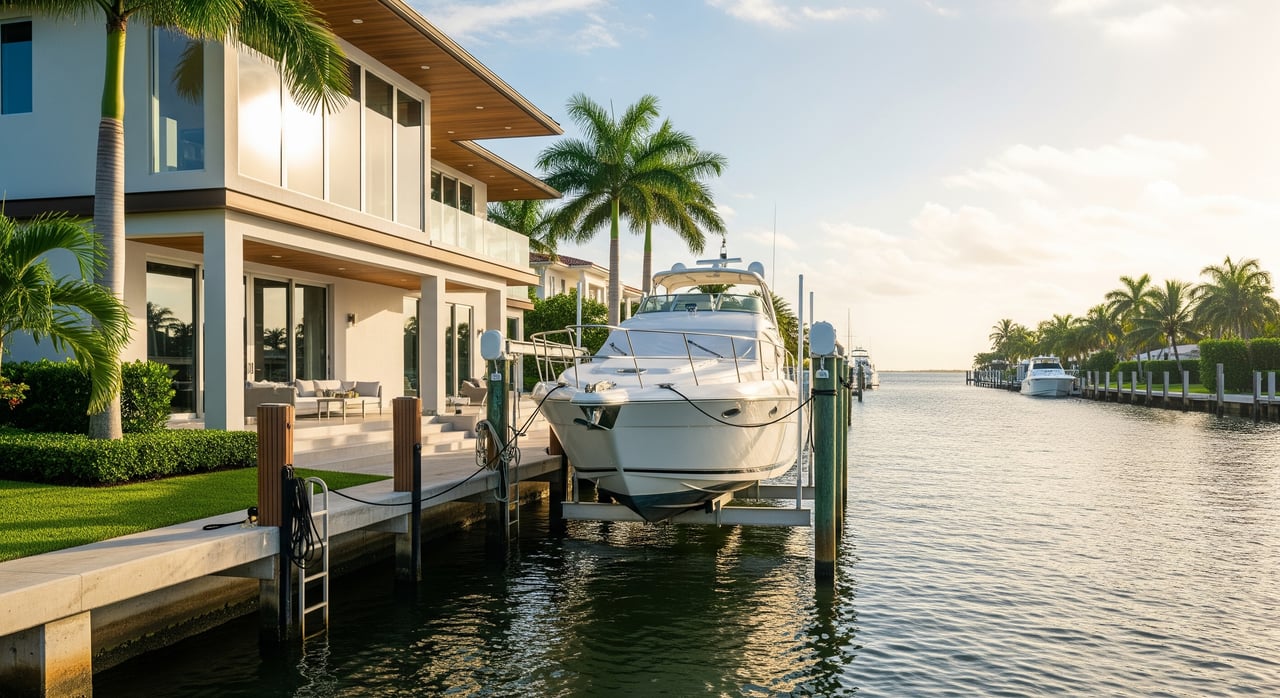
- Private dock on a canal: Immediate access and convenience. Depth and maintenance can vary. Review HOA rules and any easements.
- Municipal marina: Predictable management, posted depths, and on‑site services. Expect fees and possible wait lists.
- Commercial marina or yacht club: Full services, fixed slips, and often haul‑out. Good for larger boats or frequent travelers.
- Dry storage or boat lift: Limits dependence on channel depth and reduces fouling. Size and weight limits apply.
Buyer due diligence checklist
Use this step‑by‑step process to validate “no fixed bridges” and overall access before you commit.
- Gather vessel specs: LOA, beam, draft, air‑draft, displacement, and shore power needs. List your typical cruising pattern.
- Obtain the latest nautical chart for Pompano Beach and trace the route from the property to your preferred inlet.
- Compare bridge clearances along the exact route to your air‑draft at loaded waterline. If there are movable bridges, note their operating schedules.
- Ask for recent depth data: request a canal or slip survey from the seller, HOA, or marina. Confirm if depths are referenced to mean lower low water.
- Contact local authorities on dredging and maintenance. Ask about recent surveys, scheduled dredging, and any shoaling hotspots near bends or inlet approaches.
- Speak with a harbormaster or city marina about local conditions, seasonal restrictions, and minimum low‑tide depths.
- Review HOA covenants, slip leases, or dock deeds for rules on LOA, beam, draft, boat types, appearance, insurance, and maintenance duties.
- Inspect the dock and access channel in person, or engage a marine professional to check depth at low tide, piling condition, cleats, power, water, and pump‑out access.
- Confirm nearby marina services: fuel, pump‑out, haul‑out capacity and maximum LOA and weight, plus mechanical and rigging support.
- Check with your marine insurance provider about underwriting requirements for depth, hurricane plans, and any local restrictions.
- If you plan international cruising, confirm distances and timing to the nearest port of entry and that your slip allows departure during expected tides.
- Ask the seller about any past groundings or storm surge issues in the canal.
Make these verification steps non‑negotiable:
- Confirm channel and slip depth at low tide against your loaded draft, with a safety margin.
- Confirm vertical clearances along the exact route against your air‑draft.
- Review HOA and dock deed or lease restrictions for size, type, and use.
Who to call and what to ask
These sources provide the most reliable, current information for Pompano Beach and greater Broward County.
- NOAA charts and Coast Pilot: Ask for the latest edition, datum, soundings, and listed bridge clearances along your route.
- U.S. Army Corps of Engineers and Broward County: Request recent surveys, dredging reports, and scheduled maintenance for your canal or adjacent channels.
- Local marinas and the municipal harbormaster: Ask about minimum depths at low tide, shoaling trends, restrictions for LOA and beam, and available services and haul‑out capacity.
- U.S. Coast Guard: Review local marine safety information and bridge operating rules that may affect timing.
- Florida Fish and Wildlife Conservation Commission: Confirm navigation rules or environmental restrictions that may apply to your area.
- HOA or property seller: Request dock deeds or leases, maintenance responsibility details, notices about depth changes, and any recorded restrictions on boat type or size.
When you call, use clear questions:
- “What is the typical minimum depth at low tide along this route, and is it referenced to mean lower low water?”
- “Have there been recent surveys or dredging in this canal or channel?”
- “Are there movable bridges on this route and what are their operating schedules?”
- “What is the maximum LOA, beam, and weight your facility can handle, including haul‑out?”
Make a confident waterfront move
Buying for a boating lifestyle in Pompano Beach is about precision. Confirm your clearances, verify depths at low tide, and choose a neighborhood that matches your vessel and routine. If you value a discreet, white‑glove experience with trusted local insight across the Palm Beach–Broward corridor, connect with The Olive Belcher Team. We help you navigate the search with concierge transaction management and refined market guidance.
FAQs
What does “no fixed bridges” mean for Pompano Beach buyers?
- It signals a route to the ocean without passing under low, non‑movable bridges. You still need to verify your air‑draft against any bridges on your specific path and confirm depths along the way.
How do I check if my boat’s draft is safe for a private canal?
- Request recent canal and slip depth surveys from the seller, HOA, or marina, confirm the reference to mean lower low water, and compare to your loaded draft with a safety margin.
Are movable bridges a problem if there are no fixed bridges?
- Movable bridges open on schedules or request, which can add time but not height limits. Verify the operating times so your departure and return windows work for you.
Who maintains canal depths in Broward County?
- Federal channels are typically maintained by the U.S. Army Corps of Engineers. Private canals or lateral channels may rely on HOAs or owners for maintenance and dredging as allowed by permits.
How much clearance and depth margin should I plan for?
- Keep a reasonable safety buffer above your loaded draft and below posted bridge clearances. Exact margins depend on your vessel, handling, tides, and local conditions.
What are the two main inlets near Pompano Beach?
- Boats commonly use Hillsboro Inlet to the north and Port Everglades Inlet to the south, transiting the ICW from neighborhood canals to reach either inlet.